
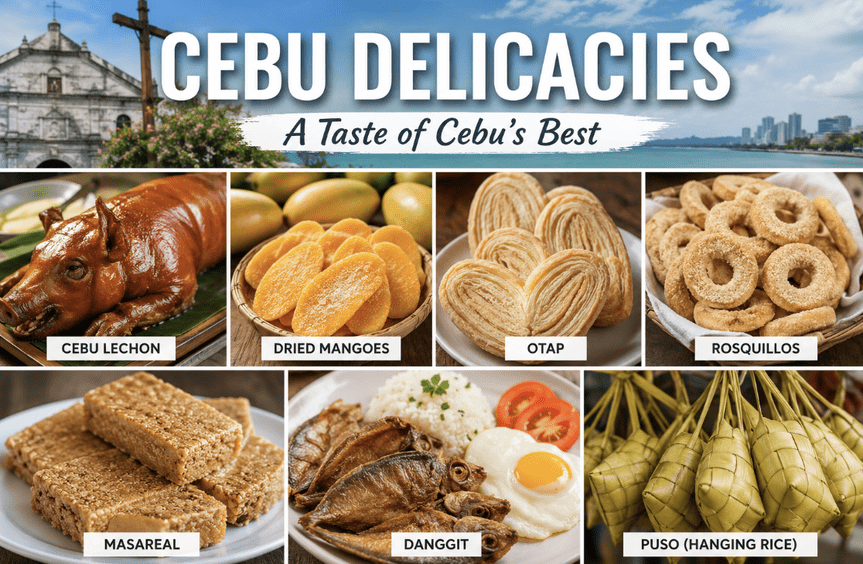
When people think of Cebu, stunning beaches and historic landmarks often come to mind. But for many travelers, one of the biggest reasons to visit the Queen City of the South is its incredible food. Cebu’s rich culinary culture reflects its history, local traditions, and abundance of fresh ingredients.
Whether you’re visiting for the first time or returning for another adventure, tasting authentic Cebu delicacies is an experience you shouldn’t miss.
1. Cebu Lechon
No trip to Cebu is complete without trying its world-famous Cebu lechon. Unlike other roasted pigs in the country, Cebu lechon is seasoned with herbs and spices before roasting, making it flavorful even without sauce.
Its crispy skin and juicy meat have earned recognition from both local and international food lovers, making it one of Cebu’s signature dishes.
2. Dried Mangoes
One of Cebu’s most popular pasalubong items is dried mangoes. Made from ripe Philippine mangoes, these sweet and chewy treats are loved by both locals and tourists.
They are easy to pack, have a long shelf life, and make perfect gifts for family and friends.
3. Otap
Otap is a crunchy, flaky pastry sprinkled with sugar. This traditional Cebu delicacy is best enjoyed with coffee or hot chocolate and is a favorite snack among locals.
Its light texture and buttery flavor make it one of the city’s best-known baked treats.
4. Rosquillos
Rosquillos are ring-shaped biscuits made with flour, sugar, eggs, and butter. They have a mildly sweet flavor and a crisp texture that pairs well with coffee or tea.
This classic Cebu snack has remained a favorite for generations.
5. Masareal
Masareal is a traditional sweet delicacy made from finely ground peanuts, sugar, and syrup. Rich, creamy, and slightly crumbly, it offers a unique taste that reflects Cebu’s local culinary heritage.
6. Danggit
Danggit, or sun-dried rabbitfish, is one of Cebu’s most famous breakfast dishes. It is usually served with garlic fried rice, eggs, and vinegar, creating a simple yet satisfying Filipino meal.
Visitors often buy vacuum-packed danggit to bring home as pasalubong.
7. Puso (Hanging Rice)
Known locally as puso, this rice is cooked inside woven coconut leaves, making it convenient to carry and eat. It is commonly paired with lechon, grilled seafood, barbecue, and other local dishes.
Puso is not just practical—it is also an iconic part of Cebuano dining culture.
Where to Buy Cebu Delicacies
Visitors can find authentic Cebu delicacies in local markets, souvenir shops, malls, and specialty stores throughout the city. Popular pasalubong centers offer a wide variety of freshly made local treats, making it easy to bring home a taste of Cebu.
Shopping at local businesses also helps support Cebu’s small entrepreneurs and preserves traditional food-making practices.
Tips for First-Time Visitors
To make the most of your culinary adventure:
- Try freshly cooked lechon from reputable local restaurants.
- Purchase dried mangoes and pastries from trusted stores for guaranteed quality.
- Visit local markets to discover unique regional snacks.
- Bring insulated bags if you’re taking home seafood products.
- Sample different delicacies to experience Cebu’s diverse food culture.
Final Thoughts
Cebu’s culinary traditions are one of the province’s greatest treasures. From the crispy and flavorful Cebu lechon to sweet dried mangoes, crunchy otap, and savory danggit, every delicacy tells a story of local culture and craftsmanship.
Whether you’re exploring Cebu for a weekend or an extended vacation, don’t miss the opportunity to experience its authentic flavors. These iconic delicacies offer more than just delicious meals—they provide a deeper appreciation of Cebuano heritage and hospitality.